


In the world of modern work and living environments, the demand for serenity and focused spaces has given rise to the popularity of soundproof cabins. As a dedicated soundproof cabin supplier, I understand the significance of the sound absorption coefficient and its impact on the performance of our products. In this blog, I'll delve into what the sound absorption coefficient of a soundproof cabin is, why it matters, and how it relates to our offerings, such as the Soundproof Office Cabin Box and Soundproof House.
Understanding the Sound Absorption Coefficient
The sound absorption coefficient is a fundamental parameter in acoustics. It measures the effectiveness of a material or structure in absorbing sound energy rather than reflecting it. The coefficient is expressed as a value between 0 and 1. A value of 0 indicates that the material reflects all the incident sound, while a value of 1 means that the material absorbs all the sound that hits it.
For example, a perfectly reflective surface like a mirror - smooth metal wall would have a sound absorption coefficient close to 0. In contrast, materials specifically designed for sound absorption, such as acoustic foams, can have coefficients approaching 1 at certain frequencies.
In the context of a soundproof cabin, the sound absorption coefficient is a key factor in determining how well the cabin can reduce reverberation and external noise. Reverberation is the persistence of sound in an enclosed space after the source has stopped, and it can cause a muddled and distracting acoustic environment. A high sound absorption coefficient helps to minimize reverberation, making the interior of the cabin quieter and more conducive to activities like focused work, private meetings, or relaxation.
Factors Affecting the Sound Absorption Coefficient in Soundproof Cabins
Several factors influence the sound absorption coefficient of a soundproof cabin.
Material Composition
The choice of materials used in the construction of the cabin plays a crucial role. Different materials have different sound - absorbing properties. For instance, fiberglass insulation is a commonly used material in soundproof cabins. It has a relatively high sound absorption coefficient, especially in the mid - to high - frequency range. The porous structure of fiberglass allows sound waves to penetrate and be dissipated as heat energy through friction within the fibers.
Another popular material is acoustic fabric. Acoustic fabrics are often used to cover the internal surfaces of the cabin. They are designed to absorb sound while also providing an aesthetically pleasing finish. The texture and density of the fabric can affect its sound absorption capabilities. A tightly woven, thick acoustic fabric will generally have a higher sound absorption coefficient than a thin, loosely woven one.
Cabin Design
The design of the soundproof cabin also impacts the sound absorption coefficient. The shape of the cabin can influence the way sound waves interact with the interior surfaces. For example, a cabin with irregularly shaped walls can help to scatter sound waves, increasing the likelihood that they will be absorbed by the sound - absorbing materials.
The presence of air gaps within the cabin structure can also enhance sound absorption. Air acts as a natural insulator and absorber of sound. By creating multiple air layers within the walls and ceiling of the cabin, we can improve the overall sound absorption performance.
Frequency Range
The sound absorption coefficient is frequency - dependent. Different materials and cabin designs perform better at different frequencies. Low - frequency sounds, such as the rumble of traffic or the bass from music, are generally more difficult to absorb than high - frequency sounds. Our soundproof cabins are designed to have a balanced sound absorption coefficient across a wide range of frequencies. This ensures that they can effectively reduce a variety of noise sources, from the high - pitched chatter of voices to the low - frequency hum of machinery.
Measuring the Sound Absorption Coefficient
There are several methods for measuring the sound absorption coefficient of a soundproof cabin. One common method is the reverberation time measurement. In a reverberation chamber, a known sound source is activated, and the time it takes for the sound to decay by a certain amount (usually 60 decibels) is measured. The sound absorption coefficient can then be calculated based on the reverberation time and the volume and surface area of the chamber.
Another method is the impedance tube method. This method is more suitable for measuring the sound absorption coefficient of small samples of materials. The sample is placed in an impedance tube, and a sound wave is sent through it. By measuring the reflected sound, the sound absorption coefficient of the sample can be determined.

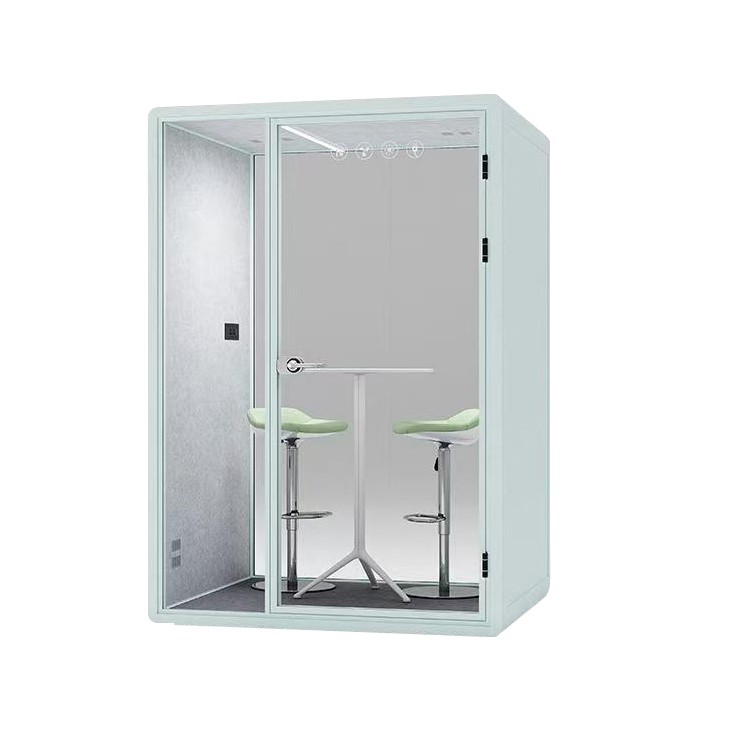
At our company, we use a combination of these measurement methods to ensure that our soundproof cabins meet the highest standards of sound absorption performance. We conduct thorough testing on each cabin model to accurately determine its sound absorption coefficient across different frequencies.
The Importance of the Sound Absorption Coefficient for Our Customers
For our customers, the sound absorption coefficient of a soundproof cabin is directly related to the quality of their experience inside the cabin. Whether it's an executive looking for a quiet space to make important phone calls, a freelancer seeking a distraction - free environment to work, or a family wanting a peaceful area to relax, the sound absorption capabilities of the cabin are crucial.
A cabin with a high sound absorption coefficient can significantly reduce external noise, creating a more private and comfortable space. It can also improve the clarity of communication within the cabin. In a meeting room setting, for example, a high - performance cabin can ensure that every participant can hear and be heard clearly, without the interference of background noise or reverberation.
Our Soundproof Cabin Offerings
As a soundproof cabin supplier, we offer a wide range of products, including the Soundproof Office Cabin Box and Soundproof House. Our cabins are carefully designed and constructed to have a high sound absorption coefficient.
The Soundproof Office Cabin Box is ideal for small - scale office use. It is compact yet highly effective in reducing noise. We use high - quality acoustic materials in its construction, ensuring that it can provide a quiet and focused work environment. The cabin's design is optimized for sound absorption, with irregularly shaped interior surfaces and multiple air layers within the walls.
Our Soundproof House, on the other hand, is a larger - scale solution. It can be used as a private living space, a home studio, or a dedicated office area. The Soundproof House is built with a combination of advanced sound - absorbing materials and a well - thought - out design. It offers a high level of sound insulation and absorption, making it a perfect choice for those who need a large, quiet space.
Contact Us for Your Soundproof Cabin Needs
If you're in the market for a soundproof cabin, we're here to help. Our team of experts can provide you with detailed information about the sound absorption coefficient of our products and how they can meet your specific requirements. Whether you need a small office cabin or a large soundproof house, we have the right solution for you.
Don't hesitate to reach out to us for more information or to discuss your purchase. We're committed to providing high - quality soundproof cabins that offer excellent sound absorption performance. Let us help you create the perfect quiet space for your work or living needs.
References
- Beranek, Leo L. "Acoustics." American Institute of Physics, 1954.
- Kinsler, Lawrence E., et al. "Fundamentals of Acoustics." Wiley, 2000.


